My Color Lab Workshop Materials List
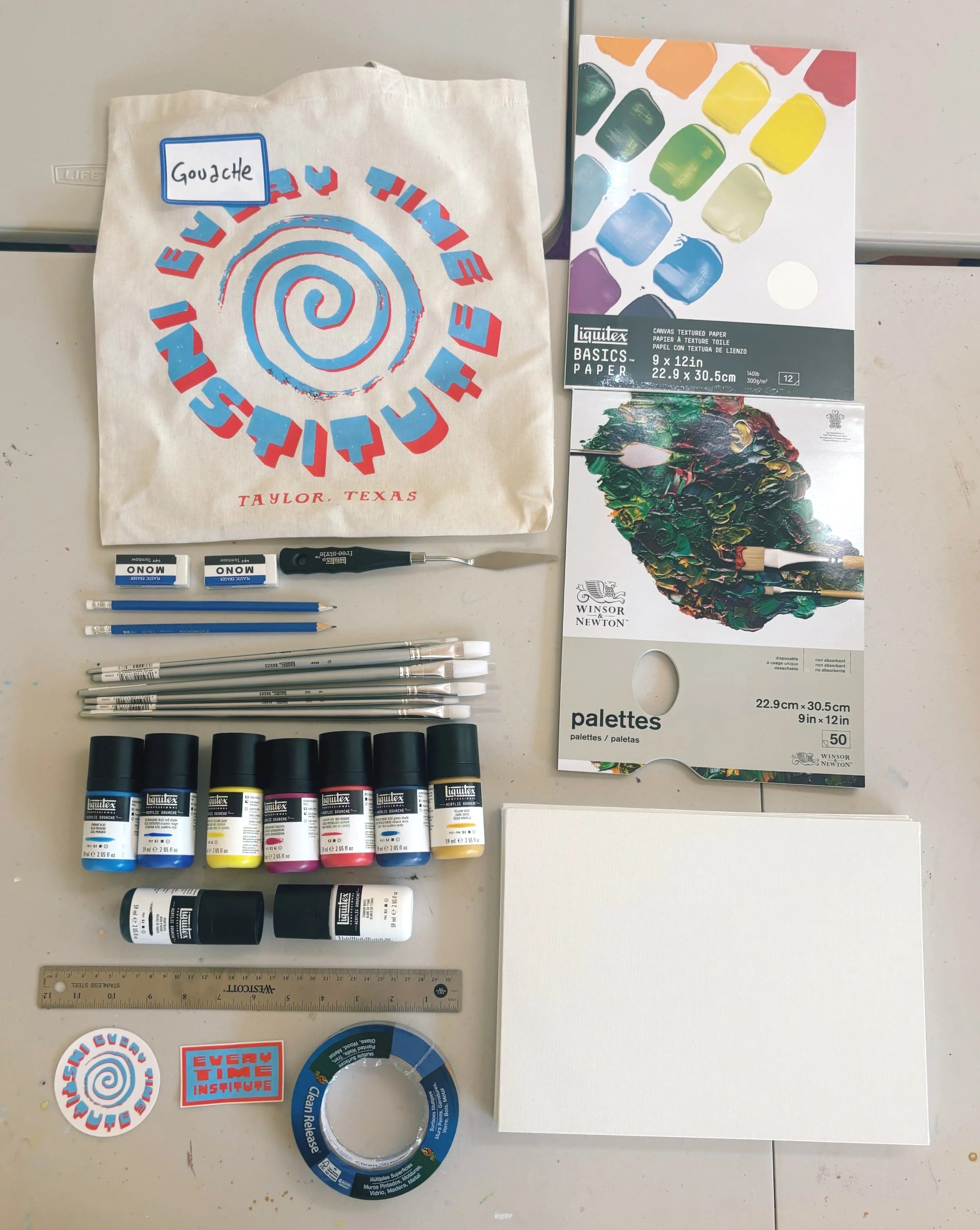
My Color Lab workshop kit via Every Time Institute
I feel like you can learn a lot from someone’s painting material list, whether you go and buy everything on it, or just skim through to see how another artist thinks. Most of us fall somewhere in between. This is the materials list I put together for a three-day Color Lab Still Life workshop I taught last month (August 2025). Alongside my own list, the venue—Every Time Institute—also graciously created optional kits for students who wanted supplies waiting for them in class.
Acrylics Materials List (via Every Time Institute)
Acrylic Gouache Materials List (via Every Time Institute)
Not only did I get my own gouache kit, but I also realized the visuals made for a perfect blog post. So here it is: the full list, plus my thoughts on why these are my favorites.
Before diving in, I’ll say this: this setup strikes what I think is the perfect balance between professional-quality supplies and affordability. Anytime you choose acrylics or acrylic gouache over oils, you save significantly. And for beginners, avoiding solvents and long dry times makes it easier to focus on making lots of studies.
That said, this isn’t a bare-bones, budget-only list. Back in college, when I was a broke student, I used to finagle free samples from Sherwin-Williams or buy returned paint buckets to use for gesso. I’ve thrifted supplies and scavenged hardware stores plenty of times. That’s a perfectly valid way to get by. But this kit gives you quality, mileage, and value without resorting to craft paint—and without running all over town piecing things together.
You’ll notice I’ve included two parallel paint kits: one with acrylic gouache, one with Liquitex Basics acrylics. Every other part of the list is identical, because both are acrylic/vinyl-based paints and work interchangeably with the same tools and surfaces. Their differences come down to finish and texture, which I’ll unpack later.
So let’s jump in.
The Essentials
The first thing I tell students is that you only need three things to paint:
A surface to paint on
Paint
Something to apply the paint with
Everything else is optional. And I still stand by that.
Surfaces
For beginners, big formal canvases can feel intimidating. One of the best things you can do is work quickly through ideas without getting too precious. That’s why I often recommend paper first.
For this workshop, I used (and love) Liquitex Basics paper.

Liquitex Basics Paper
When it comes to paper, two things matter:
It must be water-resistant enough to handle acrylics (which are water-heavy).
It must be acid-free so it’s archival.
While there’s something kind of punk about gessoing a big piece of cardboard and painting right on it (I’ve done that myself) there’s also a conceptual commentary tucked in there about the ephemeral nature of art. Paint on acidic cardboard and the surface will literally self-destruct in 20, 30, 40 years. That impermanence can feel exciting in its own way as a reminder that not everything has to last forever. But if you happen to paint something you do want to keep, whether to sell, gift, or just hang on your wall, you’ll be glad you used acid-free paper. Luckily, this paper checks both boxes. Bonus: the manufactured grain texture is lovely. Ten out of ten.
I also like Winsor & Newton panels. Canvases, especially value packs, are often loose and wonky. And for some students, the blank white canvas can feel weirdly intimidating. Panels, on the other hand, are sturdy, approachable, and with the right frame, just as beautiful and sophisticated as a gallery wrap. You can paint directly on them, or tape paper to them (whether cut down small, as many of my students did, or left full sheet). The grain, edges, and heft are excellent.
Tape
Clean-release tape is crucial for working with paper. You don’t need art-specific tape; in fact, I often find those inferior. If tearing is an issue, Scotch’s Delicate Surface tape works great.
Palettes
Your palette doesn’t need to be fancy. I have an industrial roll of freezer paper that lasts forever, and a thrifted glass frame insert that I scrape clean. In a pinch, disposable palette pads are solid. They’re flat and water-resistant—much easier to use with palette knives than, say, paper plates (a student favorite that I secretly loathe). For this workshop kit, we used Winsor & Newton palette paper.
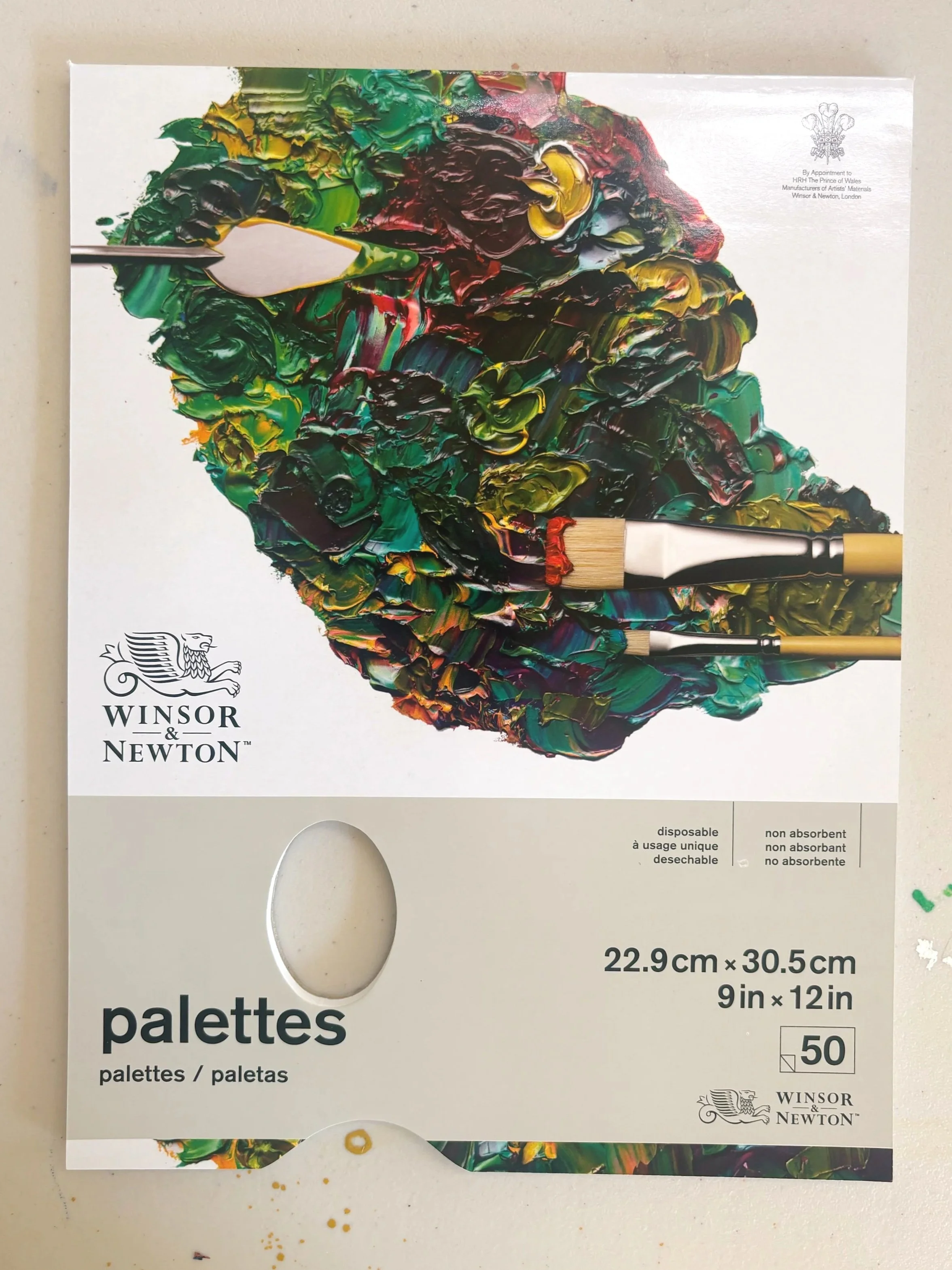
Winsor & Newton palette paper
Tools
The Liquitex Freestyle palette knife in this setup is a sturdy, standard shape that will last your whole career. Just don’t let it soak in water—the wooden handle will chip. Honestly, you shouldn’t leave any wood-handled tool soaking overnight. I’ve ruined enough by doing that. Learn from my mistakes.
Brushes
I’m a fan of Liquitex Basics brushes. I’ve tried the really high-end brands (Rosemary & Co. are lovely), but my sweet spot is one tier above craft brushes. Liquitex Basics brushes hold their shape, last a long time, and don’t break the bank.
I recommend flats and brights in sizes 2, 6 and 10. Honestly, just flats in those three sizes would cover nearly everything.

Liquitex Basics Brushes (Brights and Flats), Liquitex Freestyle palette knife, ruler
My painting style leans more on carving forms out with the sharp edge of a brush rather than painting “in” with a pointed tip. Because of that, I don’t need the fanciest brushes in the world. These do the job perfectly.
Drawing Tools
This is optional, but I also include a ruler, pencil, and eraser. They’re useful for note-taking, underdrawing, and color wheels.
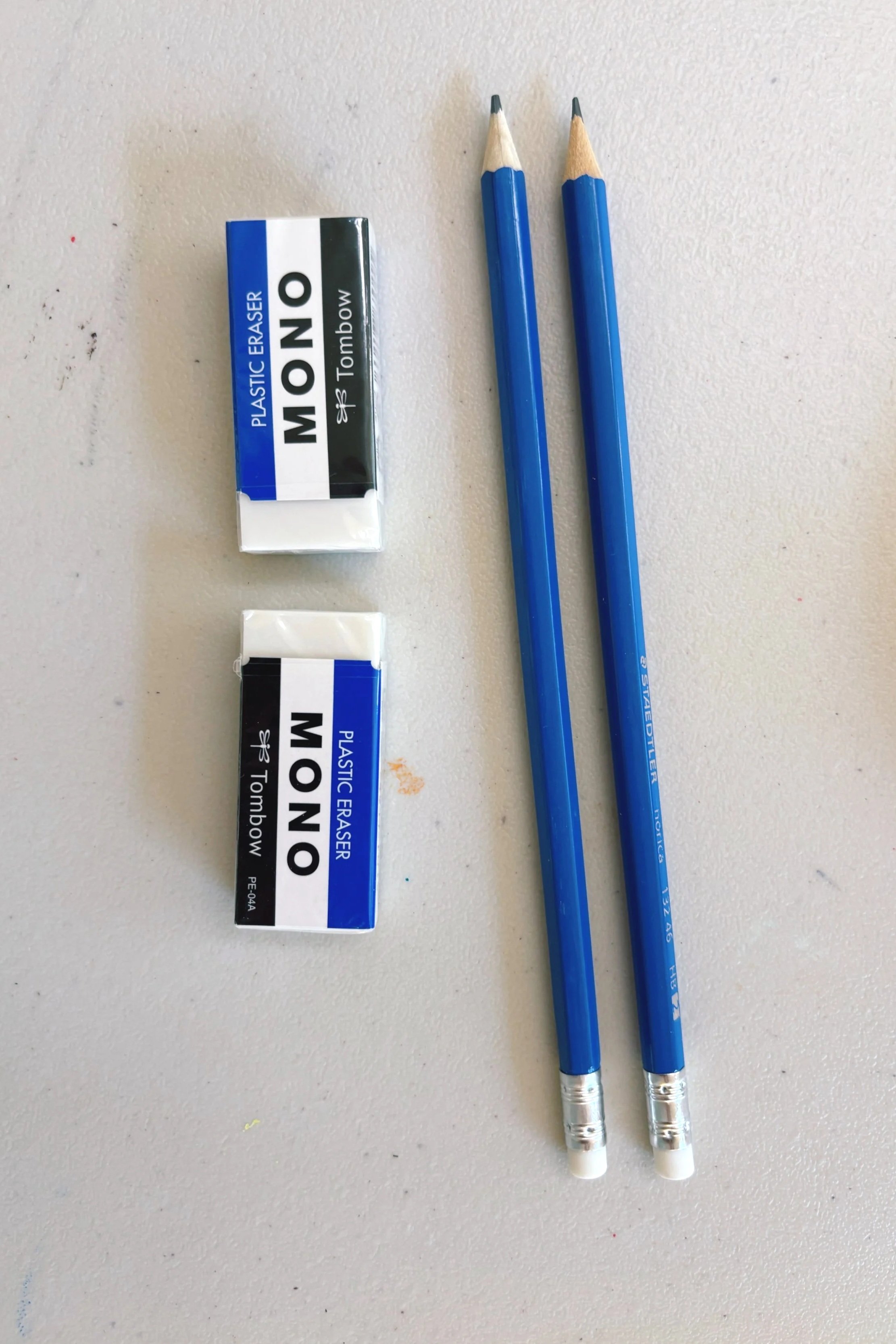
Pencils and erasers from my Color Lab workshop kit
While I encourage students to practice drawing directly with brushes (because it builds brush-handling confidence) some prefer to sketch first in pencil and glaze color over it. Totally fine. And I’ll admit: sometimes there’s nothing like having a good straight edge handy.
Paints
Here’s where things get personal. Paint choice is deeply individual, and this is the area where I encourage the most experimentation. Both acrylic gouache and Liquitex Basics are fast-drying, highly pigmented, and forgiving. Both are water-based, so you only need a jar of water to clean up.
(Not included in the kits: a mason jar or cup for rinsing brushes, plus paper towels or an old rag.)
Acrylic Gouache
Acrylic gouache is my go-to for sketches, book covers, and magazine work. It’s economical, dries matte, and a little goes a long way. Tubes last forever, and the core colors you need are:
Titanium White
Cad Yellow Light
Primary Red
Primary Cyan
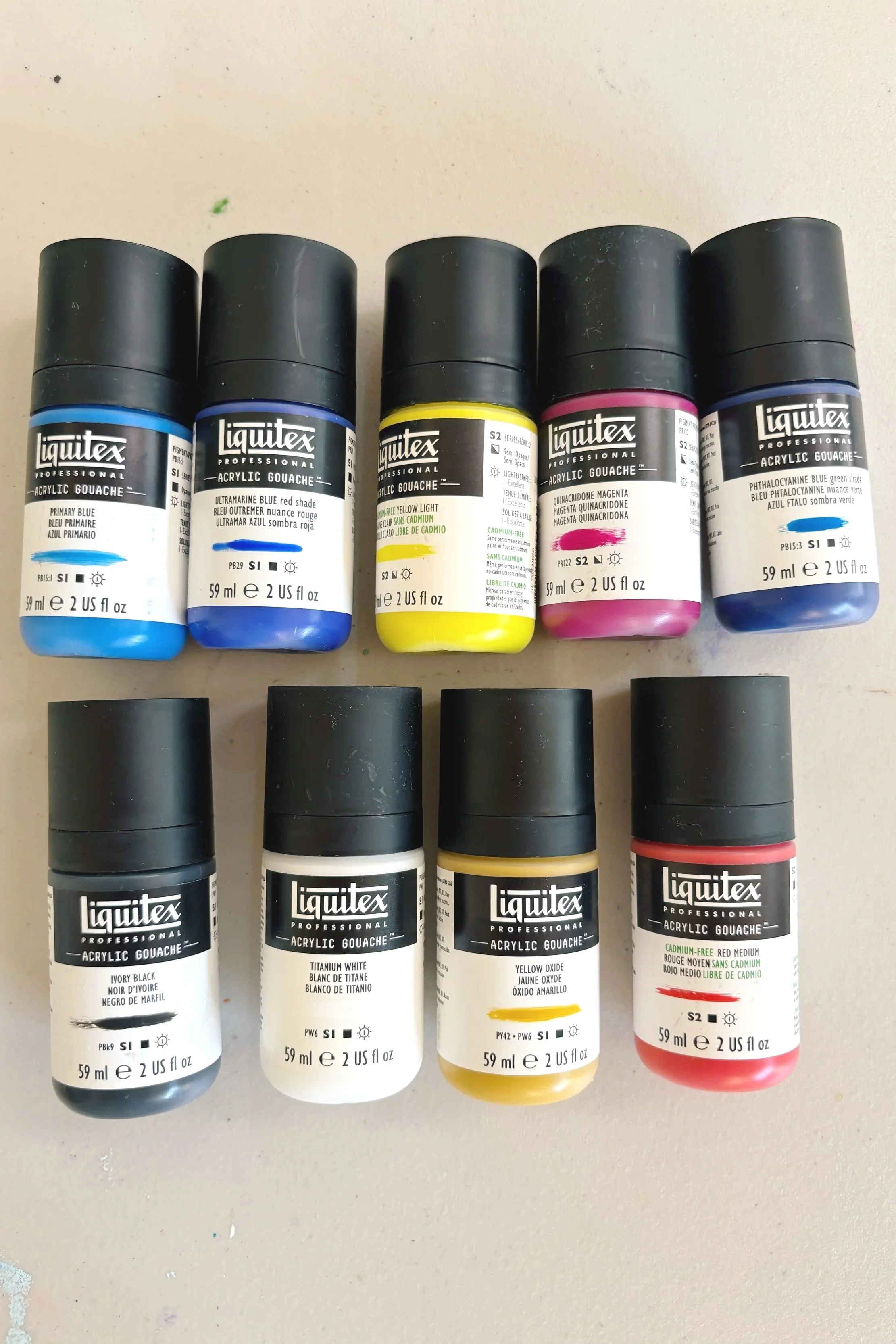
Liquitex Professional Acrylic Gouache
For this workshop, I added extras so students could experiment with the Zorn palette and do value studies. Black and white mixed into a middle gray also make a great ground.
Acrylic gouache is thin and non-textured, unlike heavy body acrylics. Tubes are smaller, but unless you’re painting huge, they’ll last a long time.
Liquitex Basics Acrylics
The Liquitex Basics Acrylic line gives you more paint for your money: four-ounce tubes that can last a year or more, even for frequent painters.
They’re less pigmented than the professional line, but some colors—Phthalo Blue, Quinacridone Magenta, Ivory Black—are indistinguishable. The workshop kit includes a CMY palette (Phthalo Blue, Cad Yellow Lake, Quinacridone Magenta, plus White), the Zorn palette, Phthalo Green, and Black.
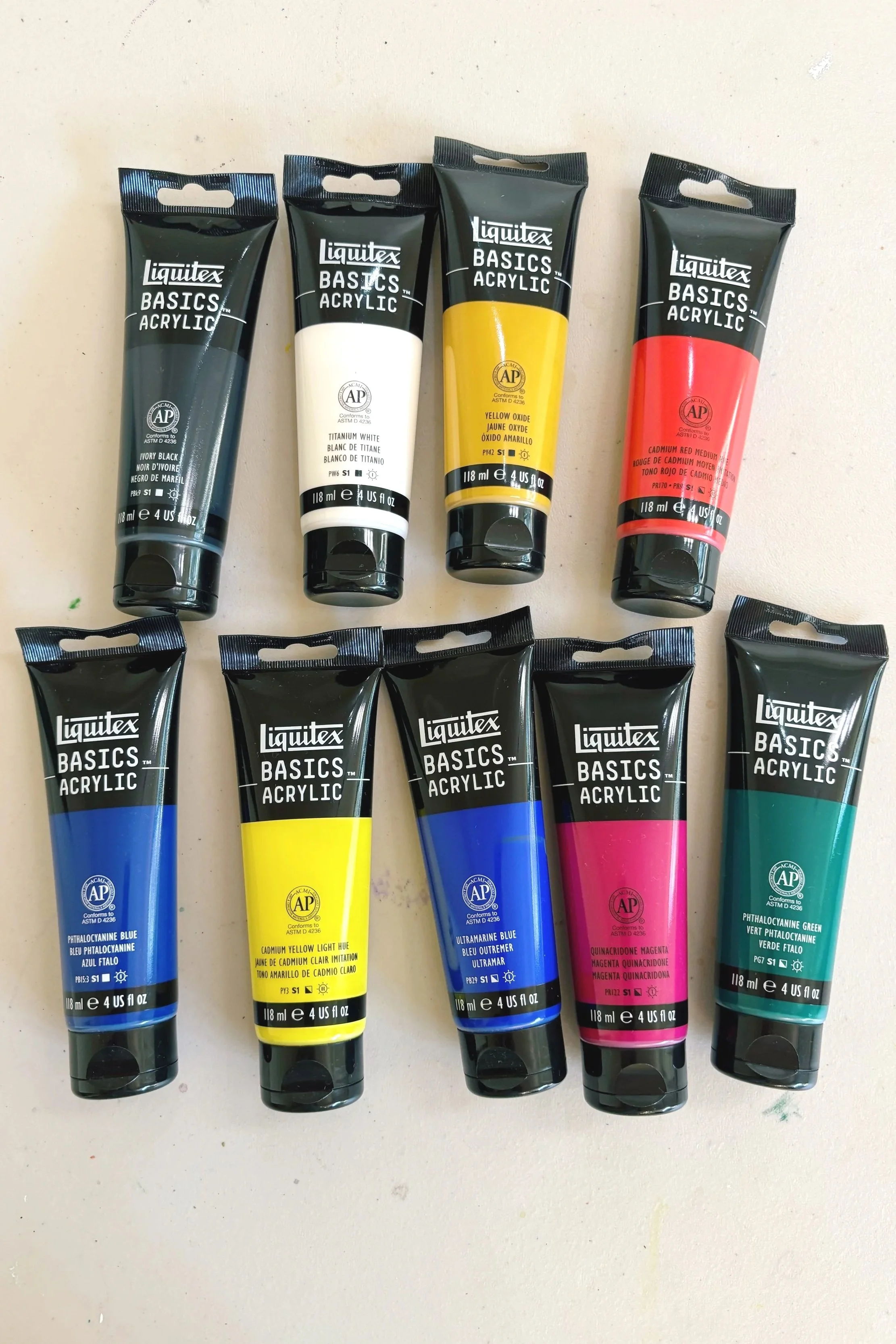
Liquitex Basics Acrylics
The drawback? They’re a bit glossier than I prefer, and the consistency is thinner than heavy body acrylics. But many students love them because the handling feels closer to oil paint.
Overall, I stand by the Liquitex Basics line. I use their gesso, brushes, and paints regularly, and I think they offer the best value out there right now.
Final Notes
The kits also came with a tote bag from Every Time Institute (a great art shop in Taylor, Texas, just outside Austin) and a couple of stickers.
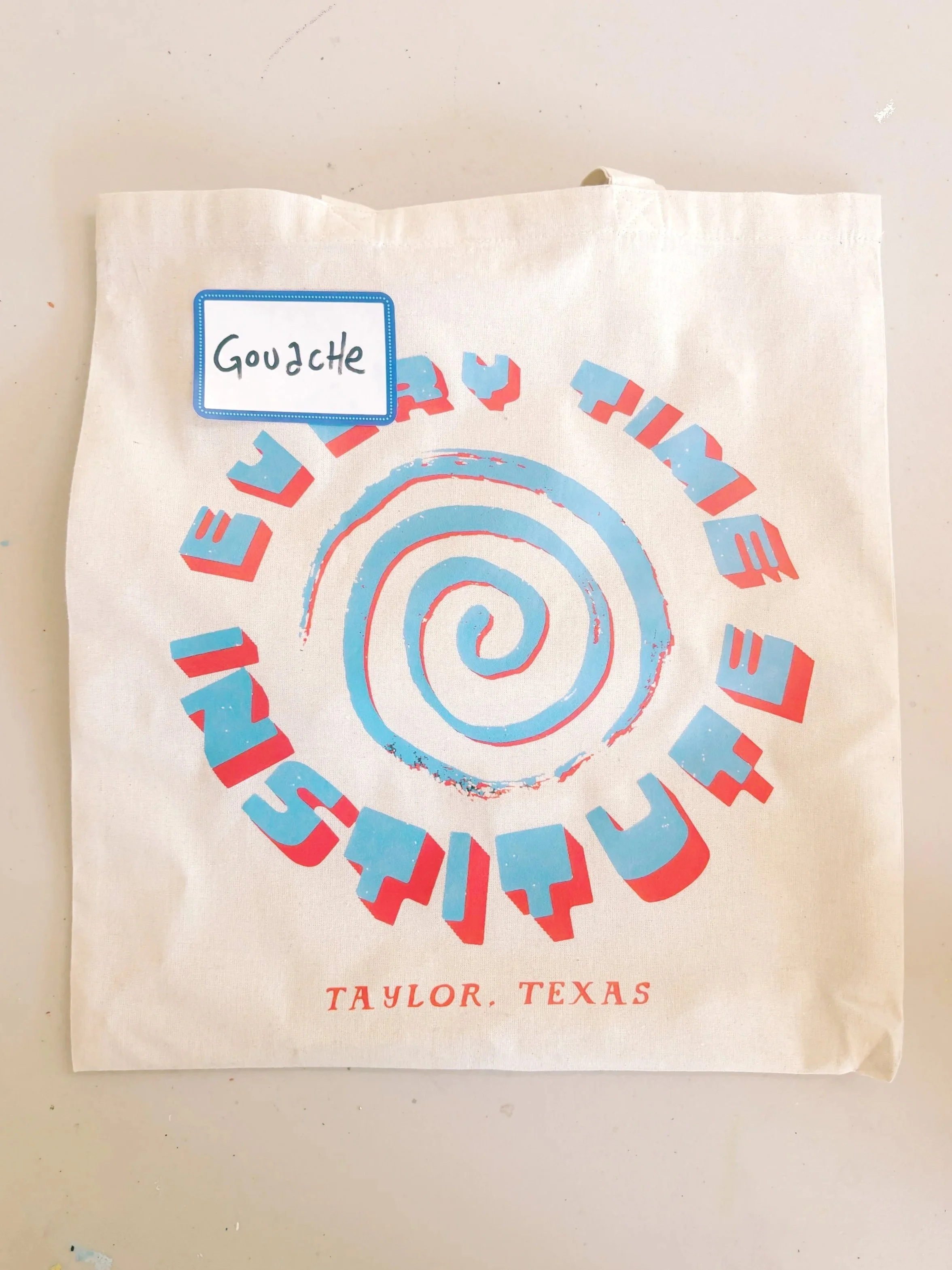
Every Time Institute tote
Hopefully this breakdown is helpful. Thanks for indulging me—it’s always fun to talk about why I like what I like. I’ll include links to both of these kits, plus direct Liquitex links for individual items.
Disclosure
I’ve always loved Liquitex. Out of my two favorite acrylic brands—Liquitex and Golden—they’re the only one that offers a premium student-grade line. As a teacher, I’ve had countless students ask me for affordable but quality options, and I’ve always been quick to recommend Liquitex Basics.
Last year, Liquitex reached out and offered me an affiliate link, which felt like a natural fit. I’m happy to share that y’all can receive 10% off your order with Liquitex by following the links I’ve provided or by using code NOTSORRY at checkout. I do receive a commission when you do so. Please note that this discount is limited to the Liquitex site— the code is not applicable for the workshop kits on the Every Time Institute page.
I always disclose these relationships, and I want to be transparent here too. That said, the impetus for this particular kit had more to do with Every Time Institute stocking mostly Winsor & Newton and Liquitex products. The synergy just worked.
I’ll always stand by Liquitex as a great company. They’re a big corporation, sure, but among the major art supply companies, I think they’re one of the best. Of course, you can adapt this list to whatever brand or line you prefer—or whatever is most available where you live.
The goal here isn’t brand loyalty but to show what I think makes a solid starter kit—one that will support your practice for months, if not years.