Residency Report No. 2: My First Rodeo
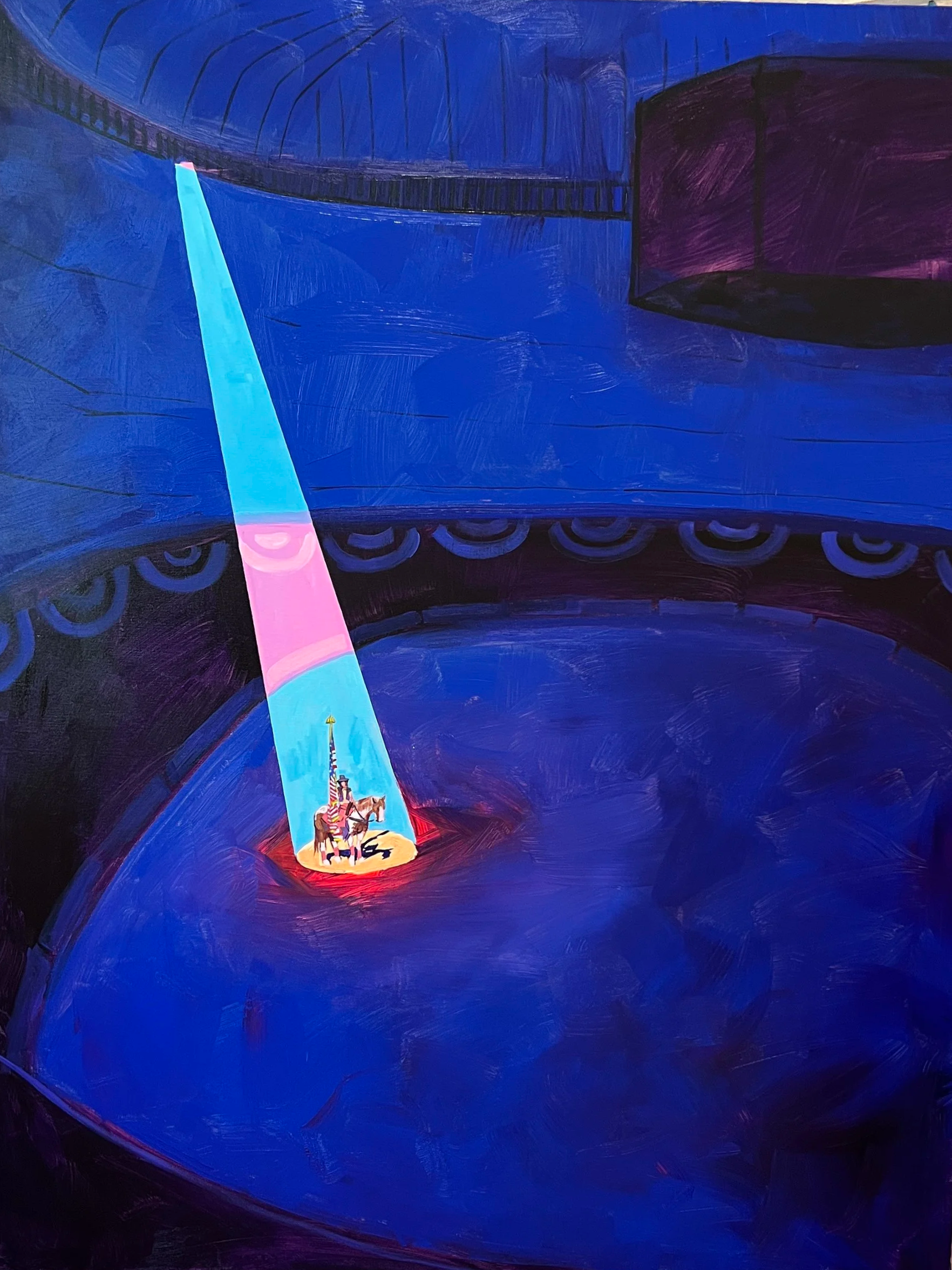
A work in progress from my Fort Worth studio.
Since my first residency report was really just a gauge of where I was starting, this feels like the first real report. I now have a month’s worth of insights, activities, and experiences to parse through and reflect on here in Fort Worth.
When I interviewed for this residency, one of the major components—alongside outreach and teaching—was making artwork during rodeo season, which traditionally runs through the last two weeks of January and the first week of February. With this event now in the rearview mirror, I’m writing this having just finished what may be the most important element of the entire residency. The last three weeks have been filled with as many rodeo and stock show events as I could fit into every spare moment, all coming in the wake of me and my family moving to this city— which made for one of the most dizzying month’s of my life, but also one of the most exciting.
I’m an experiencer. I seek novelty. What might have been exhausting or overwhelming for someone else was deeply invigorating and inspiring for me. I have leaned hard into sensing, observing, and taking in the world, and I challenged myself to work through a large number of studies on a 16×20 canvas pad, of which many have focused on the Fort Worth Stock Show & Rodeo. I kept the threshold for what counted as a “study” very low—if I felt compelled to make something, I made it. Many of these came directly from references I captured in the wild; this aligns with how I normally work: largely from reference, a little from imagination, and always in response to the physicality of the paint.
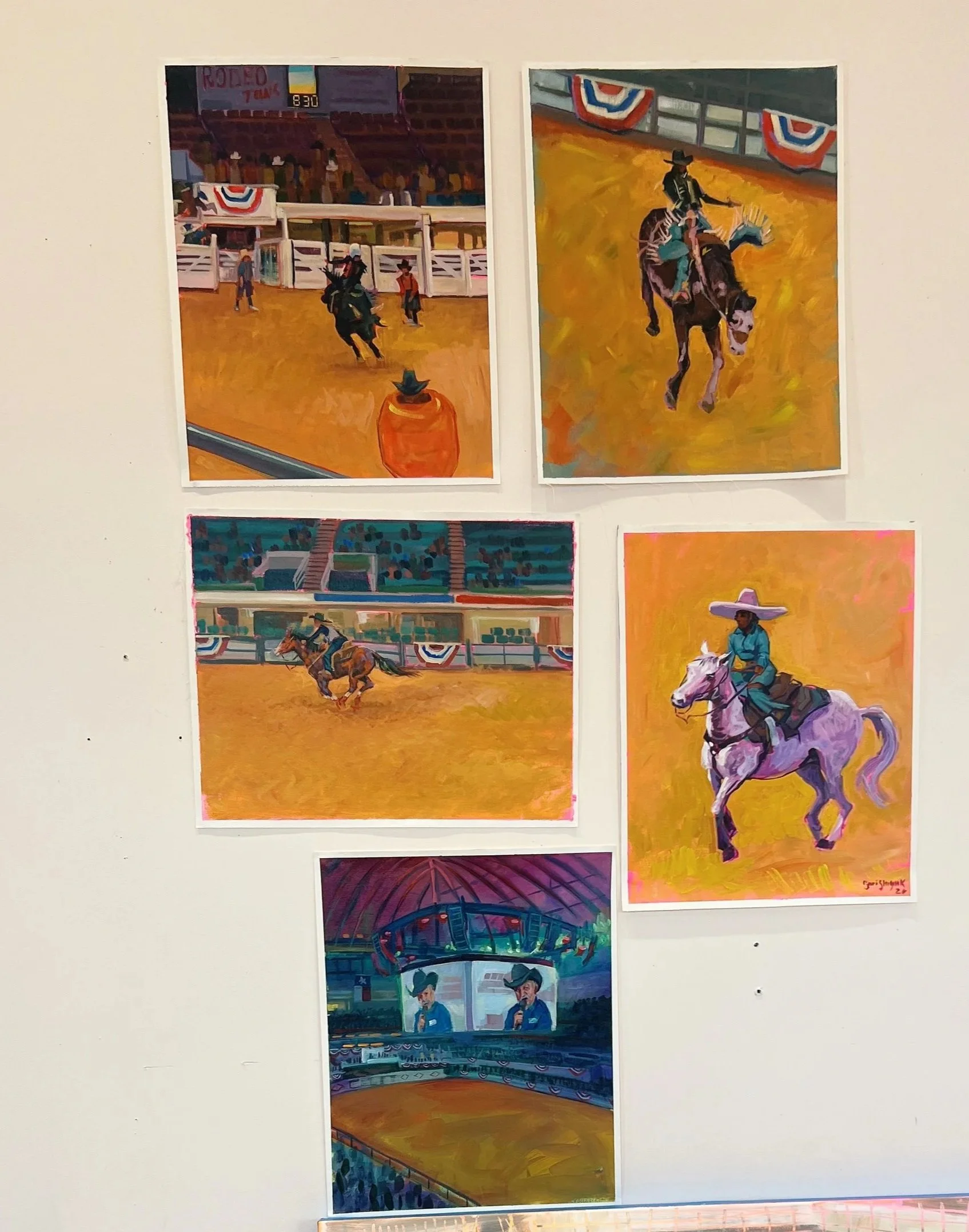
Acrylic on canvas pad. 16x20”. 2026.
A sample of recent studies.
One thing I wanted to do this year was to begin imagining and designing compositions more deliberately. Not necessarily moving fully into surrealism, but certainly edging in that direction. In many ways, the last decade of my practice has been preparing me for this. I started my art account on January 1, 2016, with the goal of getting back into painting—specifically, improving my representational skills and my ability to handle paint. I took workshops, participated in the “one painting a day” challenge, and my skills improved rapidly. My account grew faster than I expected, and I was soon able to make art my full-time job.
There’s a tendency in art to stop developing once your work gains traction—to anchor yourself to what sells. But I’ve always pushed against that. My work went especially viral on Pinterest, where it reached between four and eleven million monthly views, meaning my style was suddenly everywhere. That only made me push harder to evolve, and wow, for the first time, I feel like I’m no longer just working to improve my skill, but to use my skill to say something. It’s a subtle shift, but within this residency I feel like I’m leaving the “freshman year” of my career and entering something more mid-career, where the primary goal is no longer just improvement, but message.
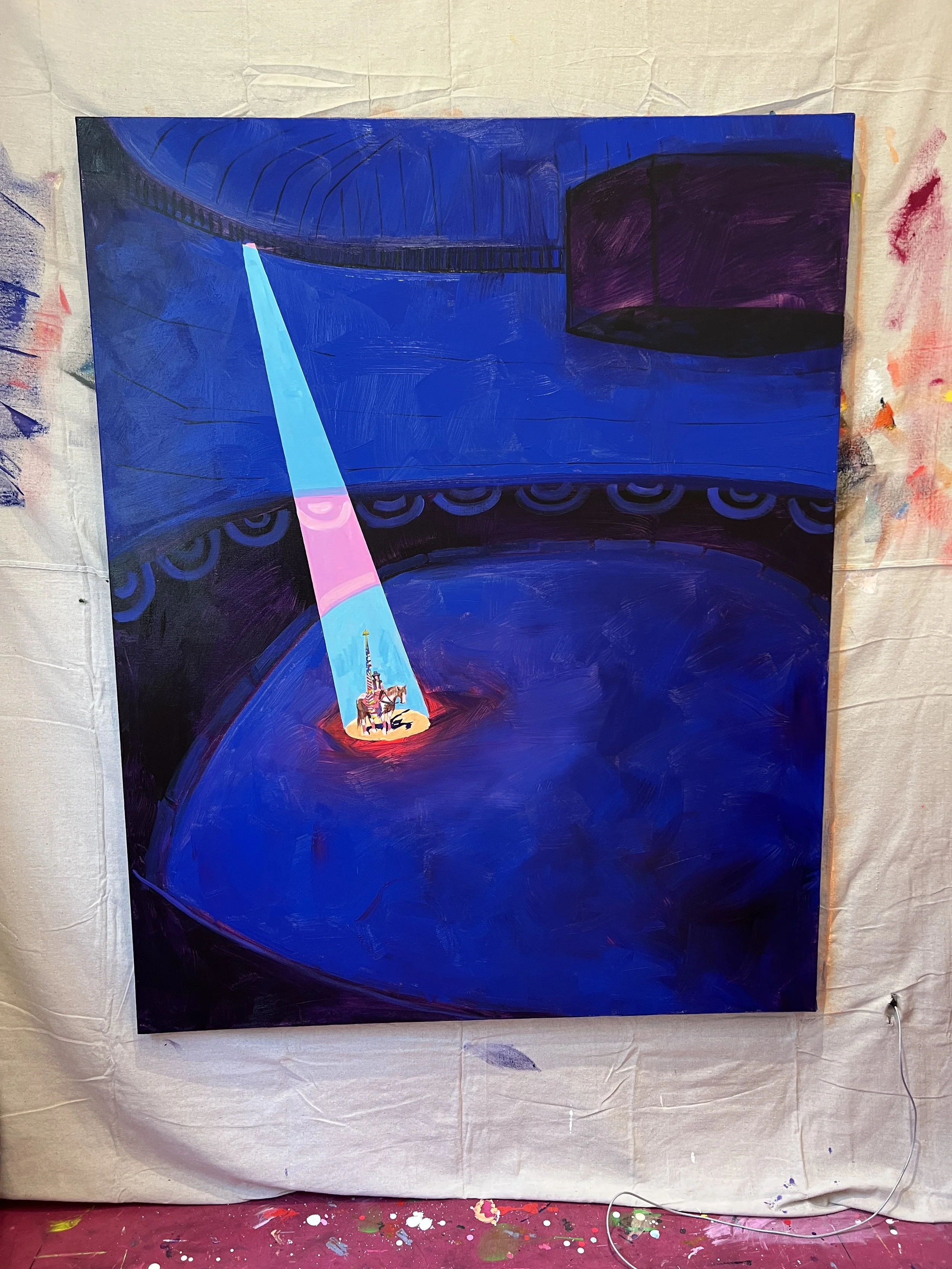
Acrylic on canvas, 48x60”. 2026.
Spotlight (wip)
The first large piece to come out of this month is a work-in-progress called Spotlight. The piece is about the cinematic, performative quality of the rodeo. That might seem obvious, but for me it opens a deep field of inquiry, especially given my history of working with working-class imagery. After re-reading Chromophobia by David Batchelor recently, I kept thinking about the distinction between surface, performance, and what gets to be seen as simply “a thing.” Everything, to some degree, is performance—clothing, posture, even faces. I think the rodeo deserves the same depth of reading that we give to, say, movies, literature, and fine art.
There are precedents for this: artists who have used rodeo imagery, Western genre painting, and Americana. I’m entering that lineage with my own questions. Another major influence this month was Prairie Fires, the biography of Laura Ingalls Wilder by Caroline Fraser. While the Little House books are set in the late 1800s, Wilder wrote them in the 1930s during the Great Depression. The biography situates her writing inside that moment—amid paper shortages, threatened farms, and New Deal politics—and, crucially, explores her relationship with her daughter Rose Wilder Lane, a prominent writer and early libertarian thinker who heavily edited her mother’s manuscripts.
What struck me most was the theme of Rose’s editing. Painters are editors too: we crop, omit, exaggerate, and compose. My own work, influenced by photographers and artists like Petra Collins and Deana Lawson, often lives on the line between documentation and staging, between what is “real” and what is constructed.
In Prairie Fires, Rose removed a scene from one of Laura’s books in which a community of men helps a woman harvest her crops because her alcoholic husband was unable to do it. Rose cut it because it didn’t fit her ideological belief in rugged self-sufficiency. But agriculture, as the book makes clear, has always been communal, precarious, and dependent on mutual aid and government intervention. By removing that scene, Rose was reshaping history to fit a myth.
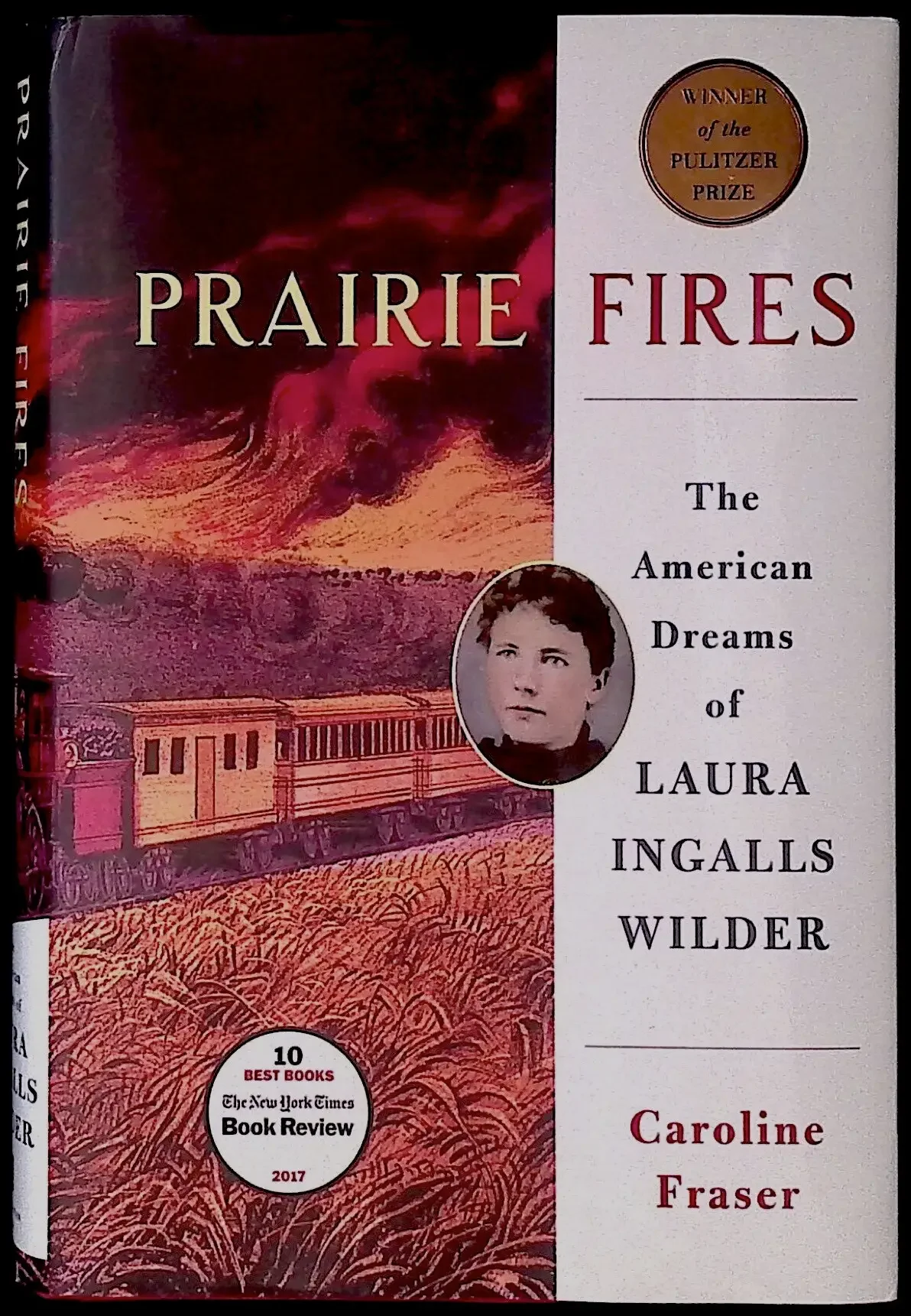
Prairie Fires: American Dreams of Laura Ingalls Wilder by Caroline Fraser
That myth—of independence, frugality, and self-sufficiency—is deeply embedded in American culture. Books like Prairie Fires and Timothy Egan’s The Worst Hard Time reveal how intentional and constructed that myth is. Certain ways of life get presented as neutral, natural, and simply “how things are,” when in reality they are performances, spectacles, and political projects.
This is where my rodeo experience begins to intersect with my reading. The rodeo is joyful, thrilling, and genuinely meaningful. It’s culturally rich and more diverse than many people expect, with days dedicated to Black cowboys and to Mexican ranching traditions. It celebrates farmers and agricultural workers, and in many ways it is the heartbeat of this region.
My critique is not that rodeo is a “red state” relic. I have grown up in red states; I know the nuance. My question is: what is cowboy culture performing? What is it saying about who we are?
Historically, there were real conflicts between ranchers and settlement farmers, especially in places like North Texas. These groups weren’t simply fighting over land, but also over values—mobility versus domesticity, gambling versus church, individualism versus communal survival. These tensions echo into the present. And yet American culture continues to present agrarian independence as a kind of neutral, timeless truth, when it has always been dependent on spectacle, government subsidy, and myth-making.
In that sense, the rodeo is not separate from performance—it is performance. It stages and re-stages a national story about who we are, what we value, and what kinds of labor and struggle count as noble. This is the terrain I’m beginning to explore through this work.